The Pasture’s illicit sex-and-drug market
The Shape of WaterThe Pasture’s illicit sex-and-drug market turns an isolated tract of brushland into a business sustained by military deployment, precarious labor, and unofficial protection. Run by Gegè Gullotta, it sells sexual services and light drugs while operating under an informal condition: no serious trouble that would force the authorities to close it. Its dependence on that condition becomes especially visible after Silvio Luparello dies at the Pasture and the resulting attention threatens the market’s ordinary business.
Setting and origins
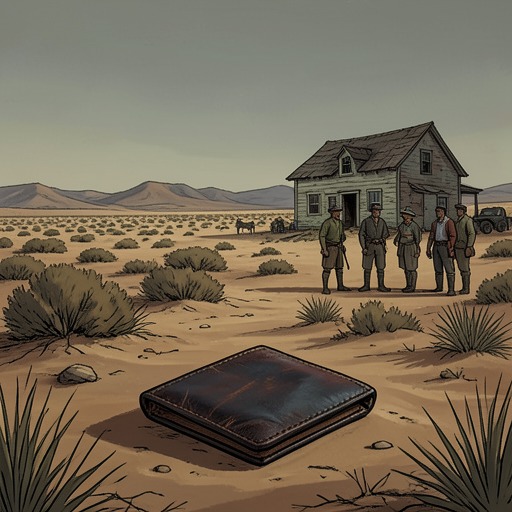
The Pasture lies on the outskirts of Vigàta, a broad area of Mediterranean scrub stretching nearly to the shore. Nearby stand the walled ruins of a large chemical works, a failed development project whose brief promise of progress left unemployment and disputed compensation in its wake. The landscape is at once a neglected industrial margin and a place of commercial opportunity: its distance from the town and its cover of bushes and sandy shore make it suitable for activity that depends on remaining out of ordinary view.
The market takes shape after military detachments are sent to Sicily region to help control the territory and relieve the many police and security services already occupied with other business. Young conscripts from northern Italy, suddenly stationed in unfamiliar, low-lying towns, are described as struggling with the climate and local speech. Residents pity their bewilderment; Gegè sees a clientele. Having learned through both unofficial and ministerial channels that the soldiers are coming, he obtains the necessary authorizations from the people who actually control the area. These permissions are not formal stamped permits. The distinction establishes the market’s basic operating logic: it is organized enough to function, but its protection depends on informal power rather than transparent legal approval.
Business and labor
Gegè develops a specialized market for sexual services and light drugs, with the business flourishing as soldiers arrive. The women come from several places, including former Eastern Bloc countries and countries in the developing world; the operation also includes transgender workers and men who serve different clientele. The account presents the market’s breadth as part of its commercial appeal, while its workers’ varied origins underline that this economy draws people into a marginal setting through circumstances not otherwise detailed.
The laborers responsible for cleaning the area encounter the market’s material aftermath. Pino Catalane and Saro Montaperto, unemployed land surveyors temporarily hired by Splendour as environmental agents, are assigned the Pasture after two other workers are arrested for an attempted armed supermarket robbery. The sector had once been an easy cleaning assignment, with scattered rubbish and occasional used condoms. Over the previous year, the condoms have multiplied into a carpet. That change registers the growth of the market not through an official count or public report, but through refuse left behind and the work required to remove it.
Gegè later tells Inspector Montalbano that he has twenty-eight people working there, in addition to Filippo di Cosmo and Manuele Lo Pìparo, who are present to prevent trouble. The number gives the operation a scale beyond a few private encounters: it is a managed workplace with a division between service provision and keeping order. Gegè is explicit about the practical stakes of that order. A fight, a stabbing, or an overdose could expose the business and make him vulnerable to closure, so the market’s continued operation depends on preventing incidents that would attract scrutiny.
Drugs and unofficial protection
Gegè describes the drugs sold as light: marijuana and, at most, cocaine. He points to the absence of discarded syringes, asking the street cleaners as potential witnesses, as support for his distinction between his trade and more dangerous drug use. This is his account of the business, not independent verification, but it shows how he presents the market to Montalbano: as a controlled operation whose limits help keep it open.
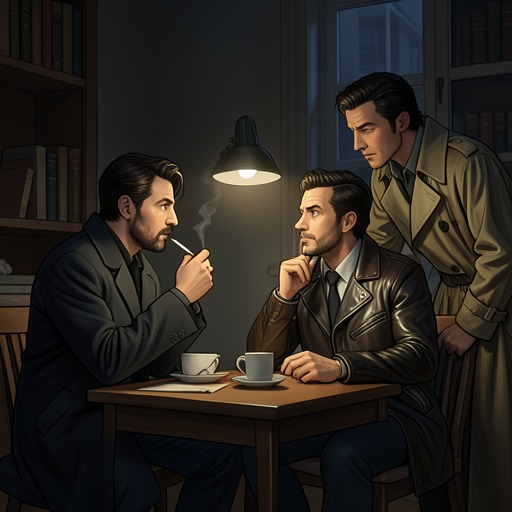
That claim of restraint does not make the business lawful. Instead, the market occupies a grey zone maintained by selective tolerance. Gegè identifies Giambalvo, the chief of vice, as a persistent presence who will put up with the operation so long as it creates no complications or major scandal. Montalbano suggests that the official does not want the Pasture shut down because he would lose his cut; Gegè responds with a smile when asked what he pays. The exchange indicates an understood financial relationship without specifying its amount or exact terms. Protection, surveillance, and possible payment are not separate from the enterprise: they are part of the conditions under which it can continue.
Scrutiny and the Luparello case
The market’s vulnerability becomes immediate when a prominent political figure, Silvio Luparello, dies at the Pasture. Gegè tells Montalbano that the death is bad for business because everyone will now be looking at the place. He wants the investigation finished quickly, after which, he hopes, public attention will fade and work can resume. His urgency is commercial, but it also exposes how little security the business possesses: an operation able to employ dozens of people can still be endangered by a single death and the attention it brings.
Gegè contributes a possible explanation of what happened in the car, suggesting that Luparello may have removed his seat belt when a woman climbed onto his lap. He does not present this as certainty. He also doubts the idea that the woman was simply a foreign sex worker, reasoning that a man of Luparello’s status would have had somewhere else to take her. The question of who the woman was remains part of the investigation rather than an established fact about the market. The Pasture is therefore both a commercial setting and a source of uncertain testimony: Gegè knows its operations and has an interest in limiting exposure, but his information does not settle the circumstances of Luparello’s death.
Economic and narrative significance
The market’s organization echoes other forms of precarious work around it. Pino and Saro obtain temporary cleaning jobs through the electoral connections of Deputy Cusumano, while Gegè uses political and unofficial channels to secure permission to operate. These are distinct arrangements, but both make access to work or protection depend on relationships outside a straightforward, impersonal system. Around the abandoned factory, failed development has left unemployment; in the brushland, a new business arises from the presence of soldiers and the opportunities created by weak or compromised oversight.
The Pasture’s growth is made legible through recurring physical traces: the condoms accumulating among rubbish, the workers assigned to clear them, and the security arrangements meant to prevent a public disturbance. Those details connect labor, commerce, and regulation without making the market a stable or openly acknowledged institution. Its success depends on people with power allowing it to operate, and its continued existence depends on the business staying quiet enough not to demand an official response. Luparello’s death breaks that quiet. The resulting investigation reveals the market’s central contradiction: it is locally organized and commercially active, yet perpetually exposed to the very authorities and political interests on whose tolerance its survival rests.